

If your Toronto home is at risk of a messy and expensive sewer backup, a professional backwater valve installation is the most effective defence. As local experts with over 25+ years of experience in waterproofing and structural work, G1000 Home Substructure delivers engineered solutions that protect your property from overloaded city sewers. This simple device is a one-way gate on your main sewer line that lets wastewater flow out but slams shut to block sewage from flowing back in during heavy storms—a critical upgrade for any homeowner in the GTA.
What Toronto Homeowners Need to Know About Sewer Backups
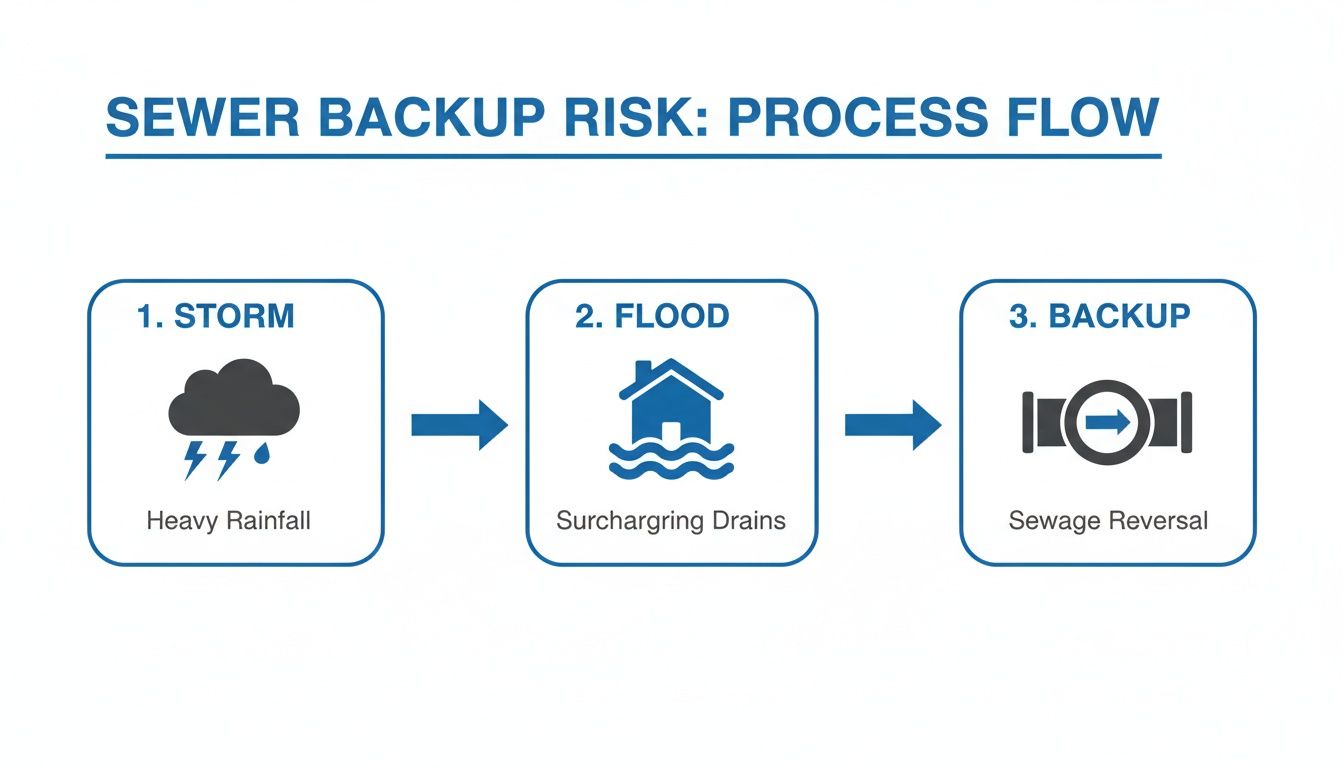
In Toronto, the risk of a basement flood from a sewer backup is a serious, ever-present concern. The city’s aging infrastructure, combined with intense modern storms, puts immense pressure on municipal sewer systems. At G1000 Home Substructure, our team has spent over 25 years on the front lines protecting local homes, and we see firsthand the destructive, smelly, and costly mess that is almost entirely preventable with the right equipment.
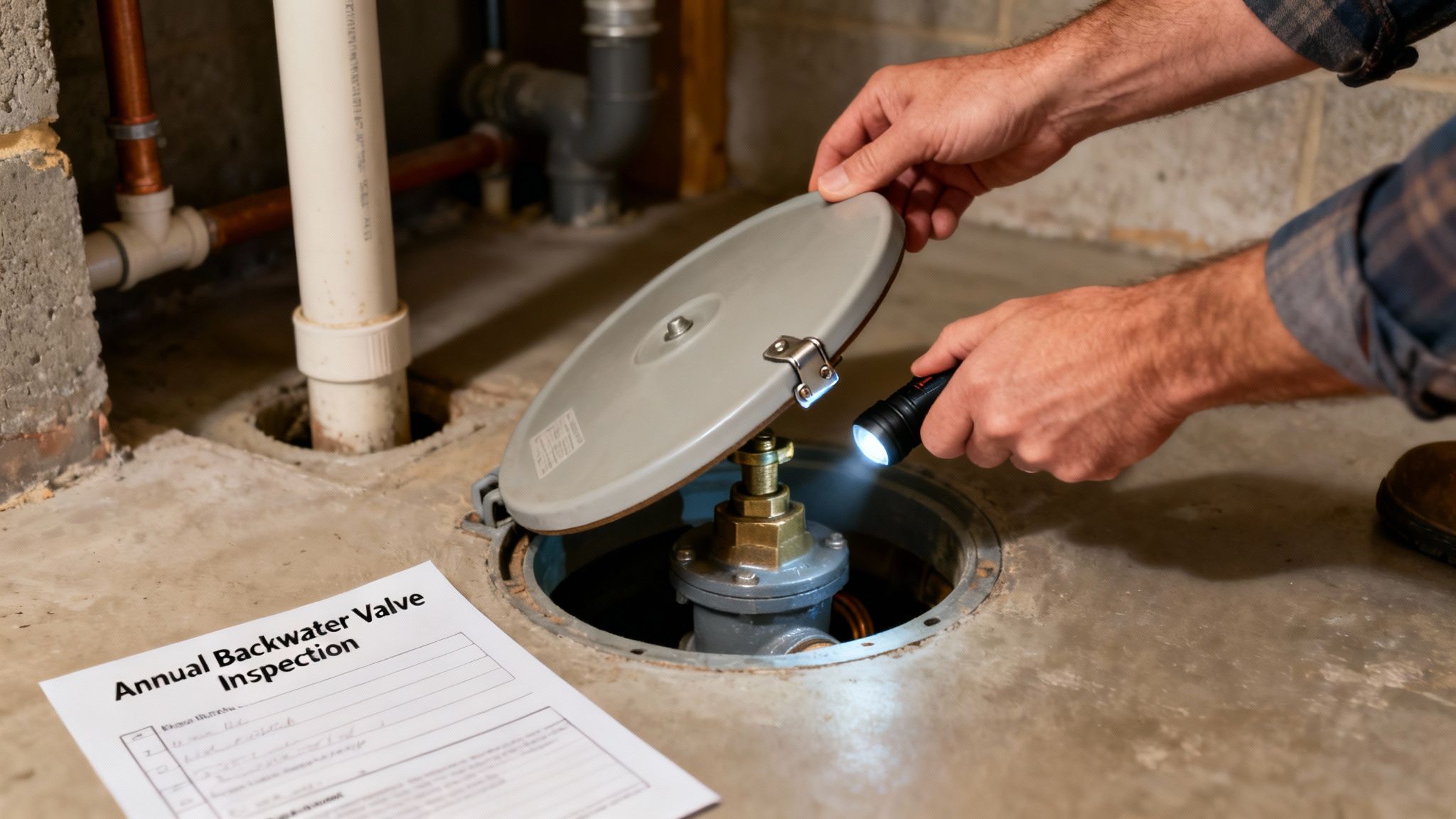
Think of a backwater valve as your home’s personal security guard for the main drain. Under normal conditions, its flap stays open, allowing wastewater to exit freely. But when a sudden downpour overwhelms the city’s sewer system, that pressure can reverse, forcing raw sewage back up the pipes and into the lowest point of your home: the basement. When that reverse pressure builds, the flap inside the valve automatically closes, creating a watertight seal that physically blocks sewage from flooding your home.
What Causes Sewer Backups in Toronto?
Sewer backups in Toronto almost always boil down to one thing: the municipal sewer system getting completely overwhelmed. A sudden, intense rainstorm dumps more water into the city’s main lines than they can handle. That water has to go somewhere, and the path of least resistance is often back up the lateral pipe connecting your home to the street.
Several local factors make this a critical issue for homeowners across Toronto and the GTA.
- Aging Infrastructure: Many of Toronto’s older neighbourhoods rely on combined sewer systems that are decades old. They weren’t designed to handle the volume and intensity of today’s storm events.
- Increased Urban Density: More homes, pavement, and concrete mean less green space to absorb rainwater, putting even more strain on the municipal sewer lines.
- Toronto Clay Soil: Much of the GTA is built on heavy clay soil, which drains poorly. This contributes to high hydrostatic pressure—the force of groundwater pushing against your foundation—and complicates water management. When the ground is saturated, you can be sure the city sewers are also under stress.
- Finished Basements: A finished basement is a huge investment. A single sewer backup can ruin flooring, drywall, furniture, and personal belongings, leading to tens of thousands of dollars in damages and a major headache.
Our Solution — A Step-by-Step Backwater Valve Installation
At G1000 Home Substructure, we never cut corners. Our process for a backwater valve installation is precise, clean, and built to provide reliable, long-term protection. Here’s how our team handles the job from start to finish.
1. Site Assessment and Planning
First, we locate your main drain line under the basement floor. We identify the ideal spot for the valve—one that is both effective and accessible for future maintenance. We also manage any required city permits to ensure the entire project is fully compliant with Toronto’s building codes.
2. Precise Concrete Breaking and Excavation
We mark out a small section of the floor and use specialized saws to make clean cuts, minimizing dust. After removing the concrete slab, we carefully excavate by hand to expose the main sewer line, ensuring we don’t disturb any other utilities.
3. Professional Valve Integration
Our licensed experts cut out a section of your existing sewer pipe. We install the backwater valve with the perfect slope to ensure wastewater flows out correctly. Using heavy-duty, professional-grade couplings, we create a completely watertight seal that can withstand the immense force of a sewer surge.
4. Testing and Commissioning
Before backfilling, we test the valve’s flap to ensure it moves freely and creates a tight seal. We also run water through the system to confirm your normal drainage is unimpeded. This is a vital check to confirm the device works exactly as designed.
5. Concrete Restoration and Cleanup
We backfill the hole, compacting it to prevent future sinking, and pour fresh, high-strength concrete to restore your floor. Our job isn’t done until we sweep up, remove all debris, and leave your basement clean.
Why Choose G1000 Home Substructure?
When it comes to your home’s main sewer line, you need a team that understands the stakes. A sloppy installation is just as bad as no installation at all.
- 25+ Years of Experience: We bring decades of hands-on construction and waterproofing expertise to every job in the GTA.
- Engineer-Backed Methods: Our solutions are proven to work in Toronto’s challenging conditions, including heavy clay soil and high groundwater levels.
- No Shortcuts, Ever: We use the best materials and meticulous workmanship. Proper preparation, correct grading, and watertight seals are non-negotiable. Everything we build is built to last.
- Transparent and Honest: We explain the process clearly, right at your kitchen table, and provide detailed quotes with no hidden fees.
- Built to Last: Our reputation is built on durability and safety. We’re focused on permanent solutions that add real value and security to your property.
Cost Factors for Backwater Valve Installation in Toronto
The cost of a professional backwater valve installation in Toronto depends on the specifics of your home. A single sewer backup can easily cause $20,000 to $50,000 in damages, making a proper installation a smart, one-time investment in protecting your property.
When our team provides a quote, we assess these key factors:
- Access to the Main Drain: An open, unfinished basement is more straightforward than working around finished walls or in a cramped crawl space.
- Concrete Floor Thickness: Older Toronto homes can have very thick concrete floors, which requires more time and equipment to break through.
- Existing Plumbing Condition: Connecting to modern PVC is simpler than working with older, brittle cast iron or clay pipes.
The City of Toronto also offers the Basement Flooding Protection Subsidy Program, which can cover a significant portion of your installation cost. We can help you with the application process.
Book a Free Inspection in Toronto
If you’re in Toronto and want to protect your home from sewer backups with an engineered solution built to last, our team is ready to help. G1000 Home Substructure delivers long-lasting results based on 25+ years of experience.
Our expertise also covers underpinning, basement waterproofing, concrete services, and epoxy floors. Learn more about us here.
To get started, contact us to book a free, no-obligation inspection and quote today.

