

If your Toronto home is dealing with a damp basement or frustrating foundation leaks, a basement sealing membrane is the permanent, engineered solution you need to keep water out for good. G1000 Home Substructure has been installing these systems for over 25 years, and we know that a proper exterior membrane is the only way to create an impenetrable shield that protects your home’s value and your family’s health. We never cut corners because a lasting repair is the only repair worth doing.
What a Basement Sealing Membrane Does for Your Toronto Home
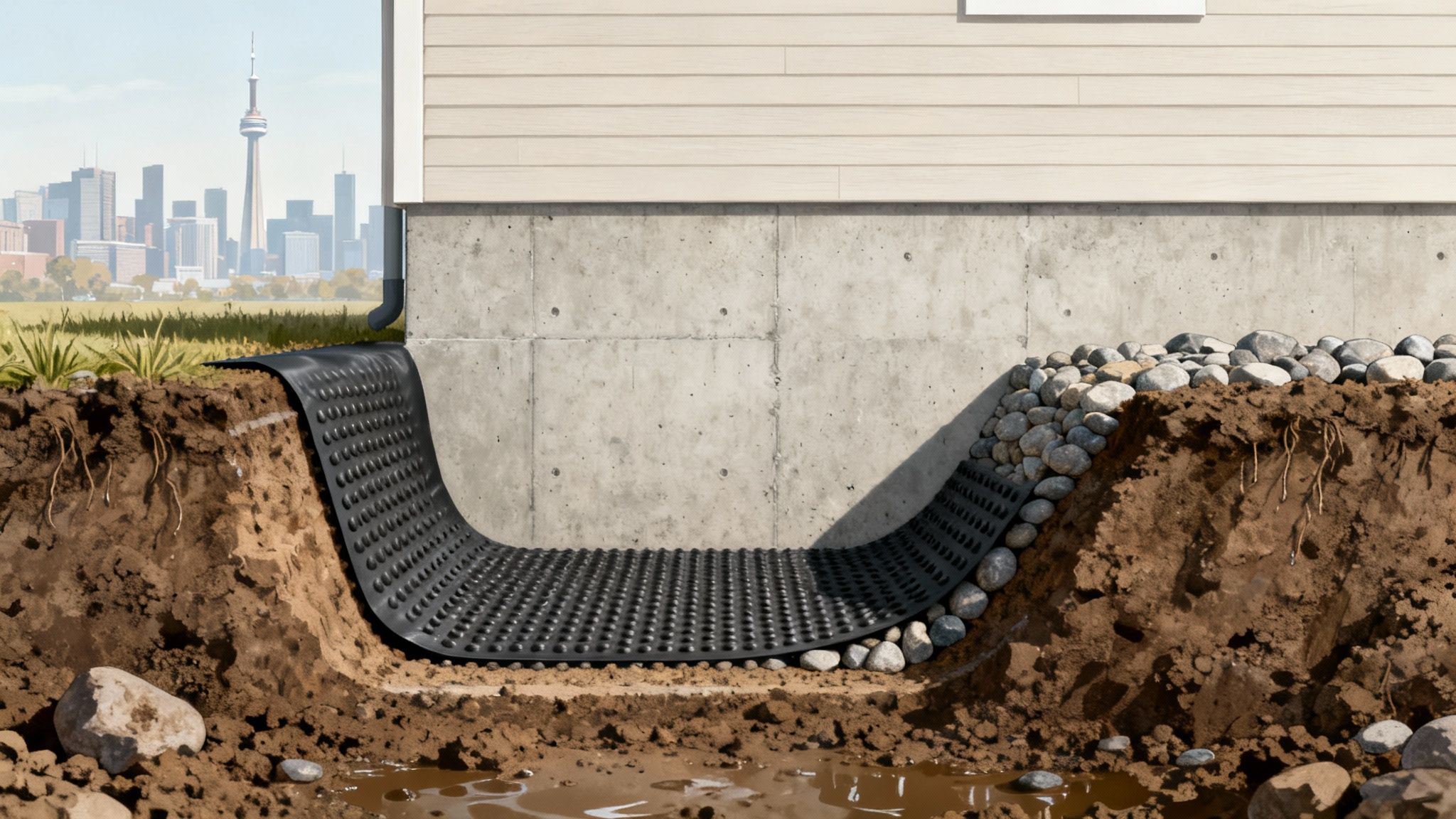
That damp feeling, musty smell, or visible water stain is your home telling you its foundation is under attack. Here in Toronto, our heavy clay soil acts like a sponge, holding water and putting immense hydrostatic pressure on foundation walls. A professionally installed basement sealing membrane tackles this problem at the source.
Think of it as a high-performance raincoat for your foundation. This is a world away from a simple coat of waterproof paint. A true membrane is a tough, flexible, and completely impermeable barrier that we install on the outside of your foundation walls. Its job is simple but critical: stop water before it even touches the concrete, preventing leaks, long-term structural damage, and the unhealthy mould that thrives in damp spaces.
The Core Purpose of a Waterproofing Membrane
At G1000 Home Substructure, we consider a sealing membrane the heart of any proper exterior waterproofing system. It’s not just part of the solution; it’s the most important one.
Here’s exactly what it accomplishes:
- Blocks Water Intrusion: First and foremost, it creates a continuous, seamless barrier that physically stops water from soaking into porous concrete or finding its way through tiny foundation cracks.
- Relieves Hydrostatic Pressure: When paired with a dimpled drainage board, the system creates an essential air gap. This allows water to drain harmlessly away, relieving the relentless pressure pushing against your walls.
- Protects Foundation Integrity: Concrete that stays dry is strong concrete. The membrane prevents the slow, steady decay caused by moisture, which leads to spalling, crumbling, and bigger cracks over time.
- Improves Indoor Air Quality: A dry basement is a healthy basement. By eliminating the dampness, you also eliminate the environment needed for mould and mildew to grow, protecting your family’s well-being.
A basement sealing membrane isn’t a temporary fix or a band-aid. It’s a permanent, engineered solution. With over 25 years of hands-on experience, we know this is the only way to guarantee a bone-dry basement and safeguard your home’s value. We don’t cut corners, because your home’s structural health is on the line.
What Causes Foundation Leaks in Toronto?
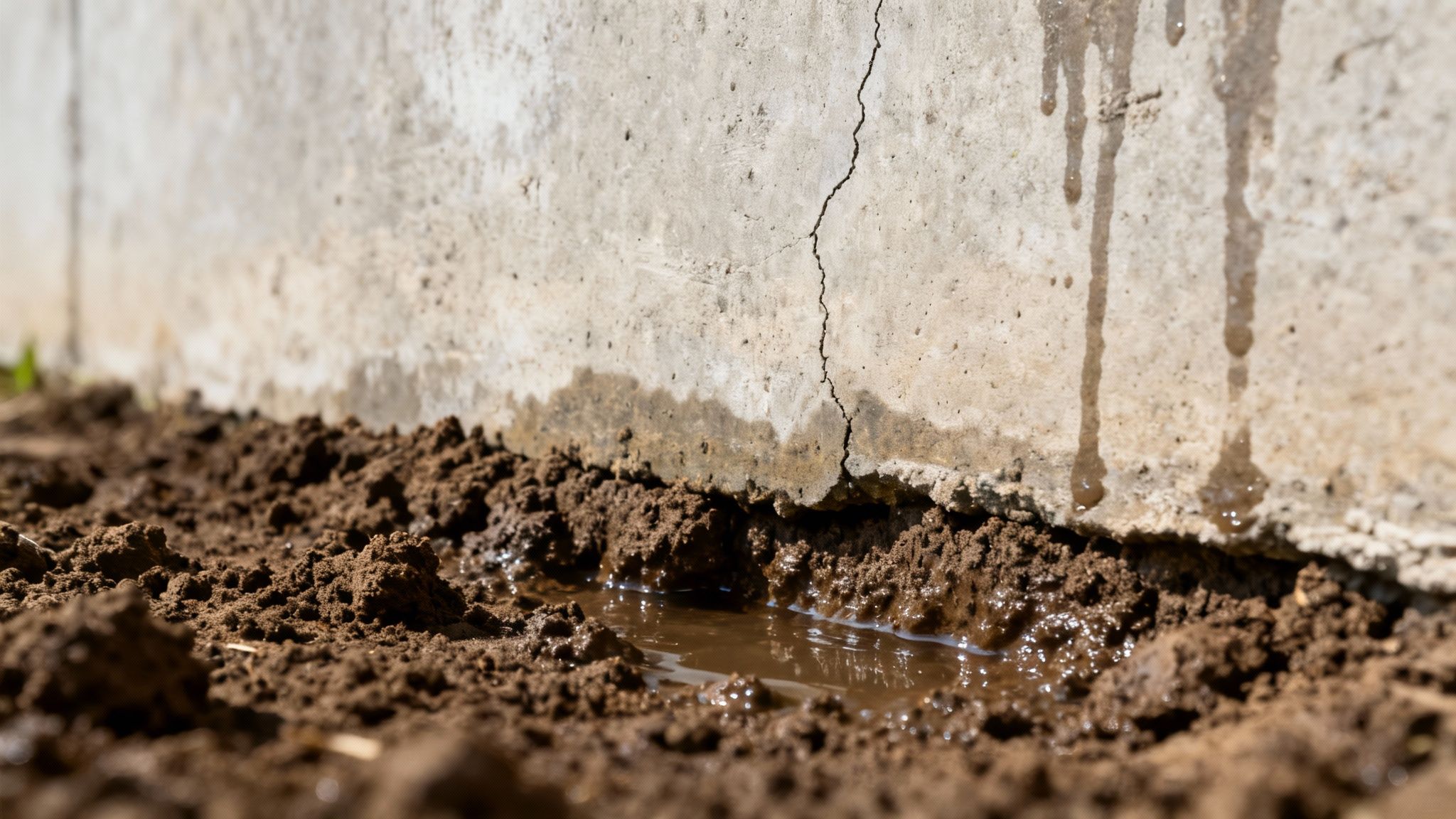
If you have a leaky basement in Toronto, you’re not alone. It’s a battle against powerful local conditions and aging homes. To fix the problem, you first have to understand what you’re up against.
The main enemy is hydrostatic pressure. The heavy Toronto clay soil your house sits in is incredibly absorbent. When it rains or snow melts, that soil becomes a heavy, waterlogged sponge pressing on your foundation from all sides.
This pressure is relentless. It’s constantly looking for the smallest entry point—a tiny crack, a weak mortar joint, or even the microscopic pores in the concrete itself. That’s how you end up with nagging leaks and that all-too-familiar damp, musty smell in your basement.
The Toll of Time on Older Foundations
Many homes in Toronto and the GTA have been standing for a long time. These foundations have weathered decades of punishing freeze-thaw cycles. Every winter, moisture in the ground freezes and expands, pushing against the foundation. Then it thaws and contracts. Year after year, this cycle slowly weakens concrete and mortar, creating cracks. A tiny fracture you can’t see is an open door for water. This is especially true for older block foundations, common in places like Durham Region, where crumbling mortar joints give water countless ways to get in.
I’ve been working on foundations in this city for over two decades. A minor crack you ignore today will almost certainly become a major foundation leak tomorrow. If you don’t build a solid barrier, water will always find a way through.
Other Culprits Working Against Your Home
Hydrostatic pressure is the big one, but a few other common issues make a wet basement almost inevitable.
Here are a few other contributing factors:
- Blocked Weeping Tiles: Your weeping tile system is a buried pipe around your foundation’s base meant to drain water away. After years, these pipes get clogged with silt and roots. When that happens, water pools right up against your foundation walls.
- Poor Grading: If your yard tilts toward your house, you’re funnelling every drop of rain directly against your foundation. Downspouts that dump water right next to the house just make the problem worse.
- High Water Tables: In some parts of the GTA, like areas in Mississauga and Vaughan, the natural groundwater level is high. This means your foundation is sitting in damp soil pretty much all the time, which keeps the hydrostatic pressure on full blast.
Patching a crack from the inside is a temporary fix at best. That’s why our team at G1000 Home Substructure focuses on proper exterior waterproofing. We believe in stopping water long before it even gets a chance to touch your foundation walls.
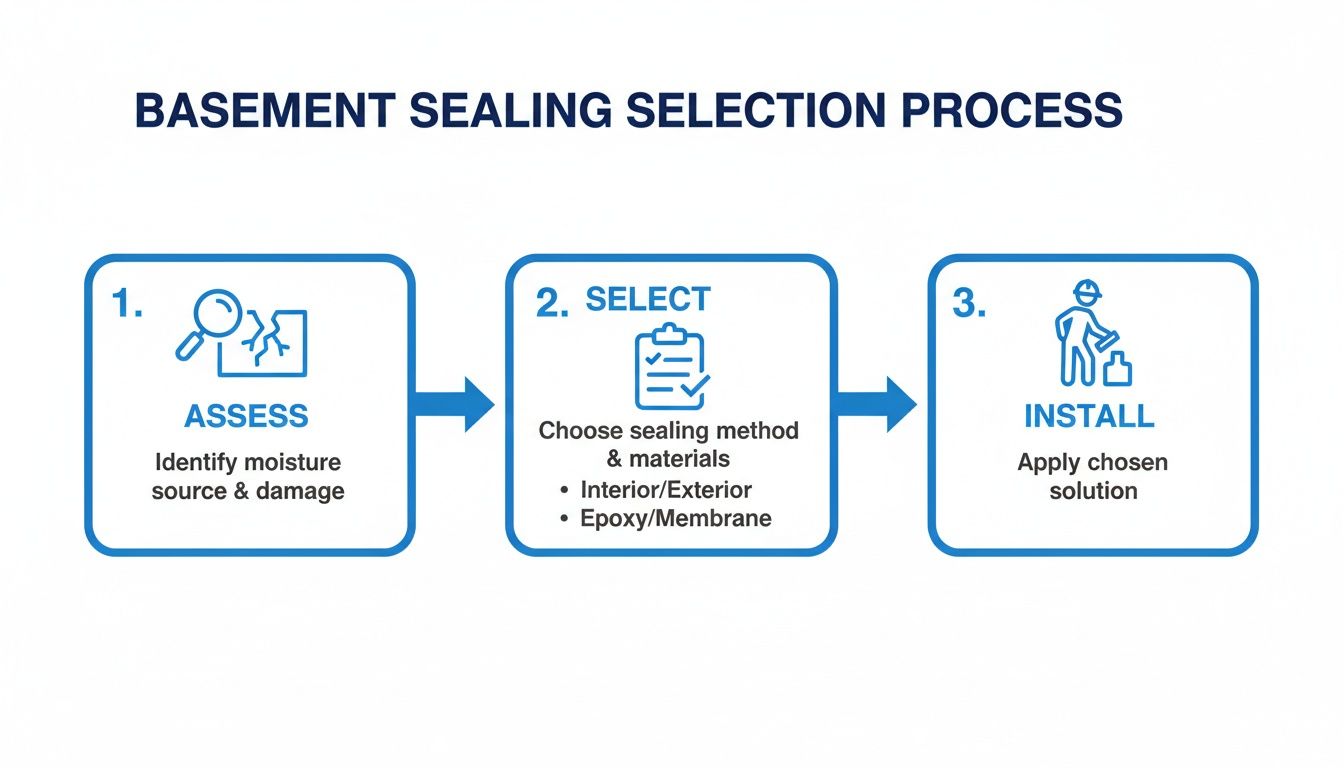
Our Solution: A Step-by-Step Waterproofing Process
At G1000 Home Substructure, we believe you should know exactly what’s happening to your home and why. Our process isn’t just about applying a product—it’s about implementing a meticulous, engineered system designed to keep your basement dry for good. There are no shortcuts.
This is a permanent solution that tackles water intrusion at the source. We address every potential weak point to build a robust system that will protect your home and your investment for decades.
Step 1: Careful Excavation
The first step is always the most physically demanding. Our crew carefully excavates a trench around your foundation, digging all the way down to the footings. This gives us full access to the exterior walls where the problem begins. We take great care to minimize disruption and properly shore the excavation site for safety.
Step 2: Foundation Cleaning and Repair
Once the walls are exposed, the real prep work begins. We pressure wash the walls to strip away all dirt and crumbling material. With a clean slate, we inspect the concrete for cracks, holes, or deteriorating mortar joints. We meticulously repair and seal every single imperfection. A waterproof membrane is only as good as the surface it’s applied to.
Step 3: Applying the Sealing Membrane
With the wall clean, dry, and sound, we apply the primary waterproofing barrier. Depending on your home’s needs, this might be a high-performance liquid-applied membrane that cures into a seamless, rubber-like shield. This layer is the heart of the system, bonding directly to the concrete to stop water dead in its tracks.
Step 4: Installing the Protective Drainage Board
Next, we install a dimpled drainage board over the new membrane. This tough sheet does two crucial jobs. First, it acts as a physical shield, protecting the waterproof membrane from rocks and damage when we backfill the soil. More importantly, the dimples create a small air gap against the wall. This gap allows any water in the soil to flow freely downwards, relieving the immense hydrostatic pressure that causes foundation leaks.
This two-layer system—a seamless membrane protected by a durable drainage board—is the gold standard in exterior waterproofing. It doesn’t just block water; it manages it by giving it an easy path away from your home.
Step 5: Weeping Tile and Sump Pump System Integration
At the bottom of the trench, we tackle the most important part of the drainage puzzle: the weeping tile. Old, clogged weeping tiles are a primary cause of wet basements. We always perform a full weeping tile replacement, installing new perforated pipe. This new pipe is laid in clear drainage stone and wrapped in a filter cloth to prevent clogs. It collects all the water and channels it to a professionally installed sump pump system, which then pumps it far away from your home. You can dive deeper into how this crucial component works in our guide on sump pump cost and installation.
Step 6: Professional Backfilling
Finally, we put everything back together. We cover the new weeping tile with more clear gravel, then backfill the soil in layers, compacting it to prevent settling. Our crew leaves your property clean and restored. This comprehensive approach is our guarantee of a permanent solution built on expertise and quality workmanship.
Why Choose G1000 Home Substructure?
Choosing the right contractor is the most critical decision you’ll make. It’s the difference between a quick fix that fails and a permanent, engineered solution that protects your home for decades. At G1000 Home Substructure, we build solutions that last, grounded in over 25+ years of hands-on construction experience right here in the GTA.
Our deep understanding of local conditions gives us an edge. We engineer a specific defence against the heavy Toronto clay soil and the hydrostatic pressure it creates. We know what it takes to protect homes from the high groundwater tables in Mississauga and Vaughan, and we’ve spent decades working on the older block basements common throughout Durham Region.
An Engineer-Backed Approach to Quality
Every waterproofing project we take on starts with sound engineering principles. Our methods for installing a basement sealing membrane are designed to be structurally sound, effective, and incredibly durable.
Our core promise is simple: an unwavering commitment to quality. We never cut corners on materials, preparation, or workmanship. The goal isn’t just to stop a leak today—it’s to make sure your basement stays dry for a lifetime.
This commitment runs through everything we do. Whether it’s complex Waterproofing, pouring new reinforced Concrete Services, or major Underpinning, our focus is always on long-term value and your peace of mind. You can learn more about our team and what drives us on our About page.
We Address the Entire Problem
A wet basement is usually a symptom of a larger issue. A basement sealing membrane must be part of an integrated system that includes proper drainage to relieve hydrostatic pressure. You can discover more insights about foundation wall protection on finehomebuilding.com.
That’s why our process always includes:
- Complete Foundation Assessment: We identify and repair every last crack and weak point in your foundation.
- Proper Drainage Installation: We ensure your weeping tile and sump pump system work in perfect harmony with the new membrane.
- Layered Protection: We use a combination of high-quality membranes and drainage boards to create a failsafe system.
From Epoxy Floors to foundation repair, we understand how your home’s substructure works. When you hire G1000 Home Substructure, you’re choosing a team with the expertise to protect your most valuable asset correctly, the first time.
Cost Factors for Basement Sealing in Toronto
As a homeowner in Toronto, you deserve a straight answer on what it costs to protect your home. Installing a professional basement sealing membrane is a major project, but understanding its long-term value is just as crucial as the price tag.
Pinning down a single price is tough because no two homes are exactly alike. Several factors directly impact the final cost.
Key Cost Factors for Your Project
Here are the main things we look at when preparing a quote:
- Foundation Size: The length of the foundation walls we need to excavate and seal is the biggest cost driver.
- Excavation Depth: Deeper basements require more digging, which adds to labour costs.
- Site Accessibility: Narrow laneways, gardens, or decks near the foundation can make excavation more challenging and add to the labour involved.
- Foundation Condition: Major cracks, crumbling concrete, or deteriorating mortar must be properly repaired before we apply any membrane. This is a critical step we never compromise on.
- System Complexity: The specific materials chosen, like a liquid membrane combined with a dimpled drainage board and a new weeping tile replacement, will influence the cost. Adding or upgrading a sump pump system is another variable.
The Return on Your Investment
While every project is unique, a complete exterior waterproofing system that involves full excavation can range from $7,000 to $15,000. The good news? Homeowners often see a 70–80% return on investment, balancing the upfront cost with the long-term value and protection it adds to your home. You can find more details about waterproofing project costs on angi.com.
Investing in a proper exterior basement sealing membrane is one of the smartest decisions you can make for your home. It’s not just an expense; it’s a permanent asset that prevents thousands in future damage from moisture, mould, and structural decay.
At G1000 Home Substructure, our quotes are detailed and transparent. We break down every line item so you know exactly what you’re paying for.
Book a Free Inspection in Toronto
If you’re tired of dealing with a damp, leaky basement, our team at G1000 Home Substructure is here to provide a permanent solution. With over 25 years of experience protecting homes in Toronto, we have the expertise to diagnose the problem correctly and build an engineered waterproofing system that lasts.
Don’t wait for a small leak to become a major structural issue. We’ll come to your home, assess your foundation, and explain the best course of action—no hype, no pressure, just honest advice from seasoned professionals.
If you’re in Toronto and need an expert you can trust, our team is ready to help. Contact us today to book your free, no-obligation inspection.

