

If your Toronto home is dealing with a wet basement or foundation leaks, a professionally installed French drain is the expert solution you need. More than just a ditch with rocks, it’s an engineered drainage system designed to intercept groundwater and surface runoff before it can damage your foundation. At G1000 Home Substructure, our 25+ years of experience mean we build systems that relieve hydrostatic pressure permanently, protecting your home from the constant threat of water damage without cutting corners.
What Toronto Homeowners Need to Know About French Drains
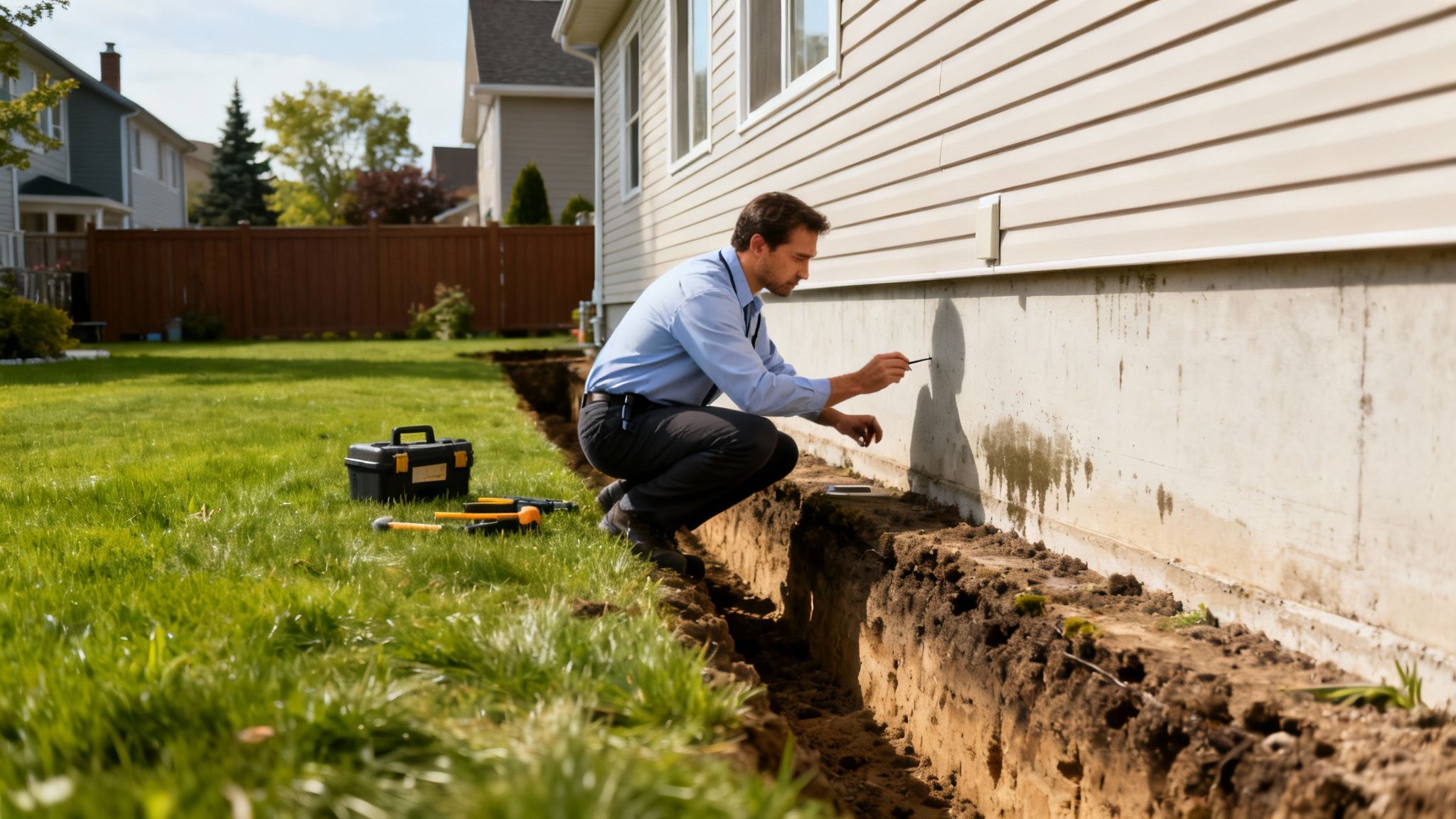
If you’re wrestling with a perpetually damp basement or stubborn foundation leaks in Toronto, you’re not alone. The dense, water-hoarding clay soil common under Toronto homes creates a perfect storm for water problems. This relentless force, known as hydrostatic pressure, is constantly pushing against your foundation walls.
A properly engineered French drain is the only truly reliable, long-term fix. It isn’t a band-aid solution. It’s an active system that intercepts water and safely guides it away, relieving that pressure and keeping your basement dry for good.
The G1000 Commitment: Built to Last
At G1000 Home Substructure, we’ve spent more than 25 years specializing in these exact problems. We’ve seen firsthand how Toronto’s clay soil and weather conditions can compromise a home, and we’ve perfected our methods to combat them. Our ‘no shortcuts’ philosophy means we build waterproofing systems designed to stand the test of time, protecting your biggest investment and giving you peace of mind.
Understanding the broader context of home protection is always a good idea. Learning how homes can prepare for drought and storms provides valuable insights that complement the targeted solutions we implement for foundation safety.
More Than Just a Trench
Anyone can dig a ditch, but a French drain that will function flawlessly for decades requires real expertise. It’s a science, combining a deep understanding of water flow, soil mechanics, and meticulous construction techniques.
From our experience, these are the non-negotiable elements for a successful French drain installation:
- Correct Slope: A consistent, gravity-fed slope is everything. We aim for a 1-2% grade to ensure water moves away from your foundation without hesitation.
- Quality Materials: We only use durable, non-clogging perforated pipe and clean drainage gravel. Using cheap or improper materials is a recipe for failure down the road.
- Protective Fabric: Wrapping the entire system in a high-grade geotextile fabric is crucial. This layer acts as a filter, preventing the fine silt and soil that clogs so many DIY drains.
Our process ensures these critical components are paired with expert workmanship. We take the time for proper preparation and reinforcement at every single stage. This system often works hand-in-hand with other protective layers, like a basement waterproof membrane, to create a truly comprehensive defense for your home.
What Causes Foundation Water Problems in Toronto?
Your home’s foundation is in a constant battle with the ground it’s built on, especially here in Toronto. This isn’t just about dealing with a bit of rain; it’s about understanding what that water does once it hits our unique soil. Getting to the root of these local challenges is the only way to find a permanent solution.
Most of Toronto sits on a thick, dense layer of clay. Unlike sandy or loamy soils that let water pass through, clay particles are tiny and tightly packed. When this soil gets soaked, it doesn’t drain—it swells up like a giant sponge. This expansion puts a relentless, crushing force on your foundation walls. We call this hydrostatic pressure, and over time, it can shove water through even the smallest hairline cracks in your concrete.
Understanding High Water Tables in the GTA
In areas like Mississauga and Vaughan, the problem often gets worse because of a high groundwater table. This just means the natural water level underground is already sitting close to your basement floor. After a heavy downpour or a fast spring melt, that water table can shoot up, dramatically cranking up the hydrostatic pressure. This is almost always the culprit behind that stubborn damp feeling or the water stains you see creeping up your basement walls.
“A French drain installation isn’t just about moving rain away from your house. It’s an engineered system designed to relieve the underground pressure that is constantly trying to get in. For Toronto homes, it’s a non-negotiable line of defence.”
The Vulnerability of Older Durham Region Homes
When we work on older homes in Durham Region communities like Whitby and Oshawa, we often see block foundations. These concrete blocks are naturally porous, and the mortar holding them together creates dozens of weak points for water to exploit. As these homes settle and age, the original tar-based waterproofing breaks down, making them wide open to leaks when our region’s heavy clay soil starts pushing.
These local conditions show exactly why a generic, one-size-fits-all fix is doomed to fail. If you’re looking to get a better handle on the underlying issues, learning how to improve soil drainage is a great starting point for understanding these complex water management challenges.
Our Solution: A Step-by-Step French Drain Installation
We believe you have a right to know exactly what’s happening at your home. So, let’s pull back the curtain on how a professional French drain installation really works. Think of this as the same straightforward conversation we’d have with you in person, drawing on our 25+ years of solving Toronto’s toughest water problems. Our process is methodical, backed by solid engineering, and designed to be a permanent fix—not a temporary patch.
First, you need to understand the root of the problem. Here in Toronto, our heavy clay soil is the biggest culprit. It holds water, expands, and puts immense pressure on your foundation. This is called hydrostatic pressure.
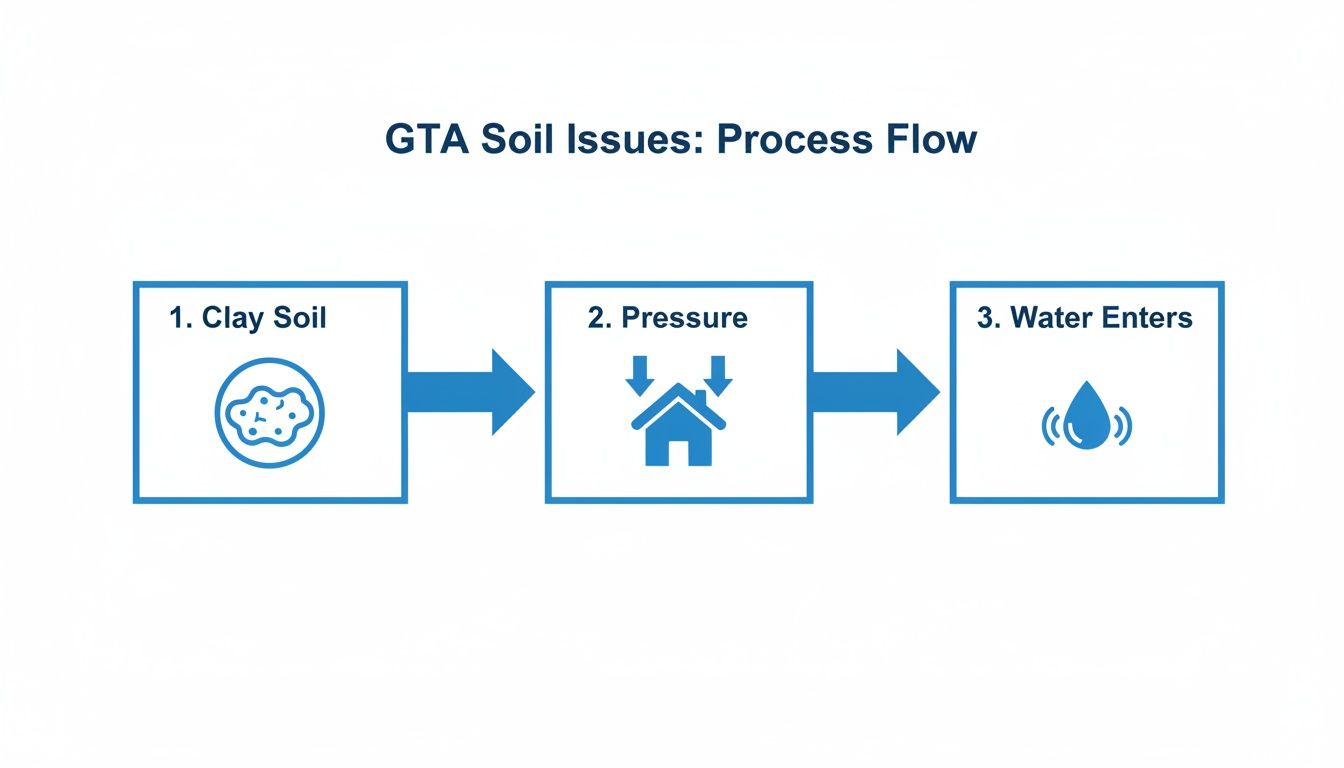
This image nails it. All that pressure is trying to force water through any tiny crack or weak point it can find. A French drain’s job is simple: give that water an easier place to go before it gets into your basement. How we do that depends on whether an interior or exterior system is right for your home.
The Exterior French Drain Process
An exterior French drain, often called a weeping tile system, is your home’s first line of defence. The goal is to catch groundwater before it even thinks about touching your foundation.
- Excavation: We dig a precise trench around your foundation’s perimeter, down to the footings, taking care to minimize disruption to your property.
- Wall Preparation: We clean the exposed foundation wall, perform any needed concrete repair, and check for cracks.
- Waterproofing Membrane: We apply a modern, multi-layer rubberized membrane for a seamless, durable barrier against moisture. This is a critical step in our exterior waterproofing service.
- Gravel & Pipe Installation: We lay a bed of clean gravel graded with a 1-2% slope. The perforated pipe is placed on top.
- Geotextile Fabric Wrap: We wrap the entire system in a tough filter fabric to prevent silt and clay from clogging the drain. This is a non-negotiable step for long-term performance.
- Backfill & Cleanup: We backfill with more gravel and topsoil, then clean the site thoroughly.
The Interior French Drain Process
An interior system is the solution when water is already getting under your basement floor. It’s designed to intercept this water from inside and get it out for good.
- Concrete Cutting: We cut and remove a strip of the concrete floor around the basement perimeter, using dust control systems.
- Trenching: We excavate a small, sloped trench down to the footings.
- Pipe & Sump Pump Connection: We install a bed of clean gravel and the perforated weeping tile, connecting it directly to a high-quality sump pump system.
- Gravel Backfill: The trench is filled with more gravel, creating an easy path for water to enter the pipe instead of your floor.
- New Concrete: We pour new concrete over the trench for a seamless, professional finish that blends with your existing floor.
Why Choose G1000 Home Substructure?
For something as important as a French drain installation, you need a team that truly gets the unique soil conditions in Toronto and has the track record to prove they get it right the first time.
- 25+ Years of Experience: We’ve solved the toughest water problems across the GTA. That experience is the practical knowledge that ensures your system is built to last.
- Engineer-Backed Methods: Our methods are grounded in solid engineering principles. We calculate the exact slope and use materials tough enough for our local clay soils.
- High-Quality Prep Work: We believe a drain is part of a bigger system. We inspect, repair, and seal your foundation before a single pipe goes in the ground.
- No Shortcuts, Ever: We know from experience that a shortcut today is a costly failure tomorrow. We build every system with proper preparation, reinforcement, and workmanship.
- Durable Materials: From heavy-duty PVC pipe to non-woven geotextile fabric, we use materials designed for longevity.
- Transparent Pricing: We provide clear, honest quotes that reflect a permanent solution, not a temporary patch.
- Work Built to Last: Trusting G1000 means partnering with a team that puts durability, safety, and long-term value above all else.
Cost Factors for French Drain Installation in Toronto
Let’s talk numbers. When it comes to a project like a French drain installation, transparency is essential. A professional quote reflects the unique needs of your property, not a number pulled out of thin air.
The final cost depends on several key factors. For an exterior system, the total length of the drain, the depth of the excavation, and site accessibility (working around decks, trees, etc.) are the main drivers. For an interior system, the cost is influenced by the amount of concrete we need to break and the power of the sump pump system required.
Typical Cost Ranges in Toronto
Here in the GTA, our heavy clay soil and intense weather mean basement flooding is a constant threat. As a result, professional drainage solutions are a critical investment.
- An exterior French drain in Toronto typically averages between $15 to $25 per linear foot.
- An interior French drain generally runs from $45 to $65 per linear foot, reflecting the labour-intensive concrete work inside your home.
You can learn more about these cost factors and national averages to see how our region compares. A cheap quote often means skipped steps or cheap materials that will fail in our local soil, costing you more in the long run.
Book a Free Inspection in Toronto
If you’re ready to solve your basement water problems for good, our team at G1000 Home Substructure is here to help. We build permanent, engineered solutions to protect your home from the ground up, with expertise in exterior waterproofing, underpinning, concrete services, and epoxy floors. Learn more about our commitment on our About page.
For a clear, honest assessment and a plan to protect your Toronto home, our team is ready to help. Book a free, no-obligation inspection today and get a permanent solution from the experts.

