

If you have a damp, leaky basement in your Toronto home, the issue is almost always a failed or missing weeping tile system. For homeowners dealing with persistent moisture, installing a weeping tile is the most effective, long-term solution to stop groundwater from getting in. At G1000 Home Substructure, we bring over 25+ years of hands-on experience to every project, ensuring your home is protected with an engineered system that’s built to last—no shortcuts, ever.
This guide explains our process for installing weeping tile, from diagnosing the cause of your basement moisture to implementing a professional, durable solution.
What Homeowners in Toronto Need to Know About Weeping Tile
Dealing with basement moisture in Toronto isn’t just a minor annoyance; it’s a constant battle against our region’s notoriously difficult soil. If you’re tired of seeing damp spots on the walls, dealing with active leaks after a storm, or smelling that musty “basement” odour, a properly installed weeping tile system is the permanent solution you need. With over 25+ years of real construction experience, we at G1000 Home Substructure have seen every kind of water problem and know how to install a waterproofing solution that works.

What Causes Foundation Leaks?
Before you can solve a wet basement for good, you have to understand what’s causing the water to get in. Foundation leaks aren’t just bad luck; they’re the result of predictable forces pushing against your home, and here in Toronto, our local conditions create the perfect storm. The common thread is almost always the same: a massive buildup of water in the soil with nowhere to go. This creates what’s known as hydrostatic pressure—the sheer force of water pressing against your foundation walls. When that pressure gets high enough, water will find a way in.
It Starts With Our Soil and Groundwater
Much of Toronto sits on dense, heavy clay soil that loves to hold water. When we get heavy rain or snowmelt, the soil becomes saturated and the water table rises. This creates an incredible amount of hydrostatic pressure pushing against your foundation walls. In areas like Mississauga and Vaughan, high groundwater tables mean your basement is sitting in saturated ground for much of the year, putting it under constant stress.
In older Toronto neighbourhoods, that heavy clay soil expands when wet and shrinks when dry. This constant cycle can cause your foundation to shift over time, creating cracks that become easy entry points for water.
Expert Insight: Over in Durham Region, in communities like Whitby and Oshawa, we see a lot of homes with block foundations. While strong, these walls are made of hundreds of individual blocks. After decades, the mortar joints can break down, creating a porous surface that lets moisture seep through during a long spring thaw or heavy rain.
The Real Point of Failure
While soil and groundwater build the pressure, the number one reason water actually gets inside is a failed drainage system. Your home’s weeping tile is your first and most important line of defence against hydrostatic pressure.
When it’s working properly, the weeping tile collects groundwater at the base of your foundation and channels it safely away. But these systems don’t last forever. Over time, they get clogged with silt, crushed by the weight of the ground, or were simply installed poorly decades ago. Once the weeping tile stops working, water has no escape route. The pressure builds until it forces its way through the path of least resistance—usually a crack in your foundation or the joint where the wall meets the floor.
Managing water below ground is a serious business. Research from large-scale drainage projects highlights how poorly managed systems can even cause environmental problems. You can learn more about the environmental considerations in drainage system research. This is precisely why a professional, properly engineered weeping tile replacement is so important. It’s not just about keeping your basement dry; it’s about managing water responsibly for the long haul.
Our Solution — A Step-by-Step Exterior Weeping Tile Installation
When you need complete, long-term protection for your foundation, nothing beats an exterior waterproofing system with new weeping tile. This is the gold standard because it tackles the problem at its source—outside your home—stopping water before it ever touches your foundation walls. At G1000 Home Substructure, our process is thorough and designed to last. We never cut corners when your home’s foundation is on the line.
Step 1: Excavation and Foundation Repair
It all starts with careful excavation. We dig a trench around the entire perimeter of your foundation, going right down to the footings. Safety is our top priority, and we secure the site to protect your property. Once the foundation walls are exposed, we clean them thoroughly and inspect every inch for cracks. Any damage we find is meticulously repaired with high-strength materials to restore the wall’s integrity.
Step 2: Applying Robust Waterproofing Membranes
After repairs, we apply multiple layers of high-grade waterproofing membranes. This is critical, as it creates an impermeable barrier. We use a two-part approach: a liquid-applied rubberized membrane followed by a dimpled drainage membrane. The liquid seals every tiny pore, while the dimpled sheet creates an air gap. This gap allows any moisture to drain straight down to the weeping tile, preventing hydrostatic pressure from building up.
Step 3: Laying the Weeping Tile with Precision
Now for the heart of the system: the new perforated weeping tile. We lay this pipe at the base of the footing, nestled in a bed of clean ¾” gravel. Precision is everything. The pipe needs a specific, consistent slope—about 1 inch of drop for every 8 to 10 feet—to keep water flowing smoothly toward the sump pump system or discharge point.
This diagram shows exactly why this is so important. You can see how hydrostatic pressure forces water through foundation cracks, causing leaks.

An exterior system eliminates the pressure that leads to these problems in the first place.
Step 4: Backfilling and Site Cleanup
Once the pipe is perfectly positioned and connected, we backfill the trench. We do this carefully, compacting the soil in layers to prevent it from settling around your foundation later on. Proper backfilling protects your landscaping and ensures proper grading.
A properly installed exterior system is a permanent solution. While it’s similar to a French drain, it’s specifically engineered for the deeper protection your foundation footings require. To learn more about managing water closer to the surface, you can read about the advantages of having a French drain installed on your property.
When an Interior Weeping Tile System Is the Right Choice
Sometimes, digging up the outside of your home just isn’t practical. You may have extensive landscaping, a deck, or an interlocking patio you don’t want to disturb. In many Toronto neighbourhoods, properties are so close together that exterior excavation is impossible.
When you’re faced with these situations, an interior waterproofing system is a reliable and effective alternative. It’s a proven method for managing water and achieving a completely dry basement.
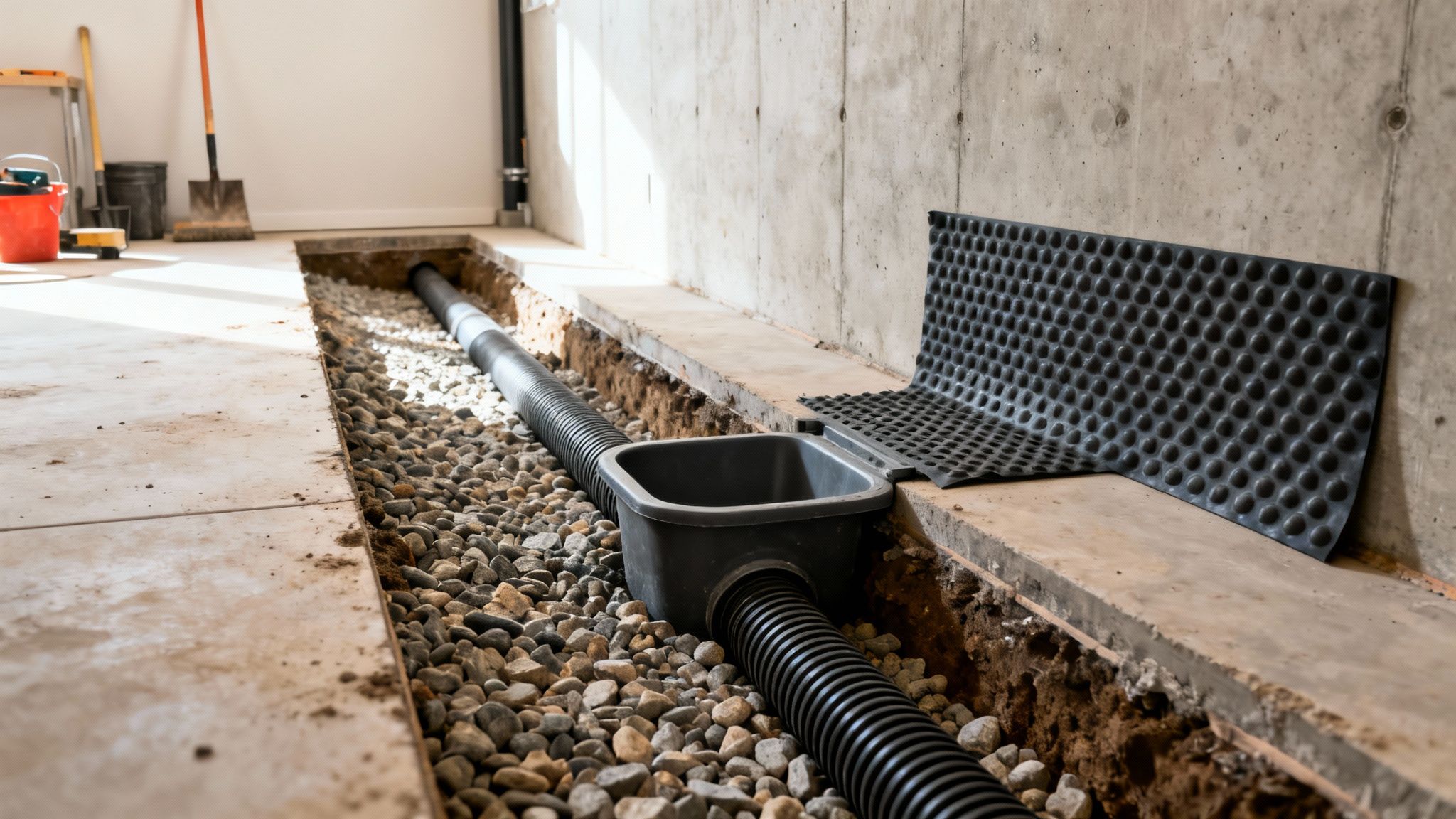
This internal system works by intercepting any water that pushes its way through your foundation and collecting it before it can pool on your floor. While it doesn’t stop basement moisture from entering the concrete, it controls where that water goes, channelling it away safely. For a deeper dive, you can explore our detailed breakdown of the differences between interior and exterior basement waterproofing.
Our Interior Installation Process
Our approach to installing weeping tile inside a home is methodical and designed to minimize disruption.
First, we use specialized saws to cut a clean channel, about a foot wide, along the inside edge of your foundation walls. We then break out the concrete and dig a small trench down to the foundation footings. This gets our drainage system to the source of the problem—the cove joint where the wall meets the floor.
Next, we lay a bed of clean ¾” gravel and install the perforated weeping tile pipe, ensuring it has the perfect slope to carry water to a newly installed sump pump system. We then fasten a dimpled waterproof membrane against the foundation wall, letting it hang down into the trench. This is especially important for older block foundations, as it channels any wall seepage directly into the weeping tile.
The final step is to pour fresh reinforced concrete over the channel, trowelling it perfectly smooth to blend seamlessly with your existing floor. You’re left with an invisible, powerful waterproofing system that keeps your basement dry from the inside.
Why Choose G1000 Home Substructure?
When it comes to your home’s foundation, the quality of the work is everything. A weeping tile installation is a serious investment, and the contractor you choose makes the difference between a permanent fix and a recurring problem. At G1000 Home Substructure, we bring over 25+ years of direct, hands-on construction experience to every job. Our focus is on doing the job right the first time, because the integrity of your home is on the line.
Here’s why homeowners in Toronto trust us:
- 25+ Years Experience: We’ve spent decades working with Toronto’s unique soil conditions and understand the demands of foundation work.
- Engineer-Backed Methods: Every system we install is based on proven engineering principles designed to last.
- High-Quality Prep Work: We thoroughly clean, inspect, and repair your foundation walls before any waterproofing components are installed.
- No Shortcuts: We use only high-grade weeping tile, clean gravel, and robust filter cloths to prevent clogging for decades. All our concrete repair work is properly reinforced.
- Durable Materials: We are committed to using materials that stand the test of time, ensuring your investment is protected.
- Transparent Pricing: You’ll get a clear, detailed quote with no hidden fees, so you know exactly what you’re paying for. A company that values efficient job and cost tracking is one that respects your time and budget.
- Work Built to Last: Whether it’s an interior or exterior system, our goal is a solution that gives you permanent peace of mind.
The core principles of good drainage are universal. In California’s Imperial County, for example, the use of tile drainage grew by 88% in just one decade to combat soil salinity. This highlights how critical properly engineered drainage is for managing water. You can discover more insights about these agricultural drainage findings on ers.usda.gov. Our commitment to these proven engineering principles is what ensures your foundation stays dry.
Weeping Tile Installation Cost Factors in Toronto
The cost of installing a weeping tile system in Toronto depends on several factors. For an exterior system, the primary drivers are the depth of your foundation and the linear feet we need to excavate. Site access is also key—a tight space that requires manual digging will cost more than an open yard where we can use machinery.
For interior systems, the main cost factor is the perimeter of your basement. The condition of your existing concrete floor and the complexity of connecting to a sump pump system also play a role. With either method, the goal is long-term value. Investing in a properly installed system with high-quality materials prevents costly future repairs and protects your home’s structural integrity.
Book a Free Inspection in Toronto
Are you tired of the dread that comes with a heavy rain forecast? A wet basement is a direct threat to your home’s foundation. At G1000 Home Substructure, we deliver permanent water management solutions. With over 25+ years of hands-on construction experience, we specialize in professional weeping tile replacement for homeowners throughout Toronto.
When you call us, we’ll schedule a thorough inspection to get to the bottom of your water problem. This lets us give you a clear, itemized quote for an engineered solution that’s truly built to last. Don’t let a minor damp spot become a major structural headache.
If you’re in Toronto and need an expert waterproofing solution, our team is ready to help. Our work is built to last. For other services, explore our main pages for underpinning, waterproofing, concrete services, and epoxy floors. Learn more about our company’s commitment on our About page.
Get in touch today through our Contact page to book your free inspection and take the first step toward a permanently dry and secure basement.
Your Weeping Tile Questions, Answered
After more than 25 years in the foundation business, we’ve heard it all. Here are some of the most common questions homeowners in Toronto ask about installing a new weeping tile system.
How Long Does a Weeping Tile Installation Take?
An exterior waterproofing project is a major job. For a typical home, expect the process to last anywhere from 5 to 10 business days. This covers excavation, wall prep, membrane application, weeping tile replacement, backfilling, and cleanup. An interior waterproofing system is much faster. Most interior systems can be fully installed in just 2 to 4 days.
Is an Interior or Exterior System Better?
One isn’t automatically “better” than the other—it depends on your property. An exterior system is the gold standard because it stops water before it touches your foundation. However, if landscaping, decks, or tight property lines make excavation impossible, an interior system is a fantastic and reliable solution that guarantees a dry basement floor.
Will My Landscaping Be Ruined During an Exterior Installation?
While some disruption is unavoidable with excavation, our crew is incredibly careful. We try to remove and save plants and sod to be put back after the job is done. We also lay down plywood to protect your lawn. Our goal is to leave your property looking as neat as it did when we arrived.
How Much Does a Sump Pump Add to the Cost?
A sump pump is the heart of any modern weeping tile system. The cost varies depending on the model—a standard primary pump, a combo unit with a battery backup, or a heavy-duty model. To get a real feel for the investment, you can learn more in our detailed guide to sump pump costs and installation.
Do I Need a Permit for Weeping Tile Installation in Toronto?
For a standard weeping tile replacement, you typically don’t need a special permit. However, if the work involves structural alterations, major excavation, or a new connection to the city’s storm sewer, a permit may be required. We handle all necessary checks to ensure your project is 100% compliant with local codes. Our “no shortcuts” philosophy means doing everything by the book.
How Do I Know if My Old Weeping Tile Has Failed?
The signs are usually hard to miss:
- A Persistent Damp Smell: A musty odour that won’t go away.
- Stains on the Walls: Discolouration or a white, chalky powder (efflorescence) near the bottom of your foundation walls.
- Puddles on the Floor: Water seeping in where the wall meets the floor after heavy rain.
- Sump Pump Issues: A pump that runs constantly or not at all can signal a clog.
If any of these sound familiar, your drainage system is likely failing.
We’ve put together this table to give you quick answers to the most common questions we hear.
Frequently Asked Questions
Quick answers to help you make an informed decision about protecting your home’s foundation.
| Question | Answer |
|---|---|
| How long will a new weeping tile system last? | A professionally installed system using modern materials should last for decades, often 50 years or more, providing long-term peace of mind. |
| Is weeping tile installation a noisy process? | Yes, there is noise involved, particularly during excavation for exterior jobs or when breaking concrete for interior systems. We do our best to minimize disruption. |
| Can you install weeping tile in the winter? | Absolutely. While frozen ground can make exterior excavation more challenging, it’s possible. Interior systems can be installed year-round without issue. |
| What happens to the excavated dirt? | We use as much of the original soil as possible for backfilling. Any excess or poor-quality clay soil is hauled away and disposed of responsibly. |
If you’re in Toronto and need an engineered waterproofing solution you can trust, our team is ready to help. G1000 Home Substructure delivers long-lasting results.
Book a free, no-obligation inspection today and get a clear plan for a dry, secure home.

